
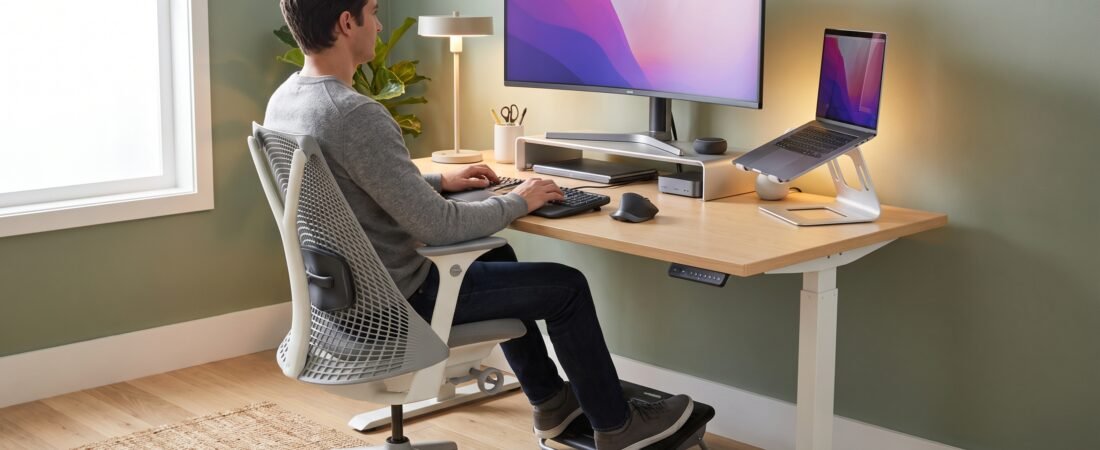
Best Ergonomic Desk Accessories for Healthy Workstations
Investing in the best ergonomic desk accessories is about eliminating the silent daily strain points that degrade your posture and focus over 8+ hour work sessions. Whether you struggle with repetitive wrist pressure, forward neck tilt, or lower-back stiffness, intentionally upgrading your setup creates an aligned, high-comfort environment. Below are the battle-tested ergonomic tools and workstation accessories worth adding to your setup this year.
Top Ergonomic Picks at a Glance
- Top Wrist Pick: Ergonomic Vertical Mouse — A vertical grip designed to place the hand in a more neutral position.
- Top Neck Reliever: Adjustable Laptop Riser — Adjustable height can help position a laptop screen higher on the desk.
- Circulation Pick: Dynamic Rocking Footrest — Provides foot support with optional rocking movement.
In This Guide
Essential Ergonomic Lineup Comparison
| Product | Target Relief | Key Benefit | Action |
|---|---|---|---|
| Ergonomic Vertical Mouse | Wrist & Hand Comfort | Vertical Handshake-Style Grip | Check Price → |
| Adjustable Laptop Riser | Neck & Viewing Position | Adjustable Screen Height | Check Price → |
| Dynamic Rocking Footrest | Foot & Lower-Leg Support | Active Rocking Support | Check Price → |
| Wave Ergonomic Keyboard | Wrist & Arm Position | Curved Layout + Palm Rest | Check Price → |
| Ergonomic Lumbar Cushion | Lower-Back Support | Contoured Memory Foam | Check Price → |
Ergonomic Reference: For general workstation setup guidance, see the official OSHA Workstation Desk & Posture Guidelines →
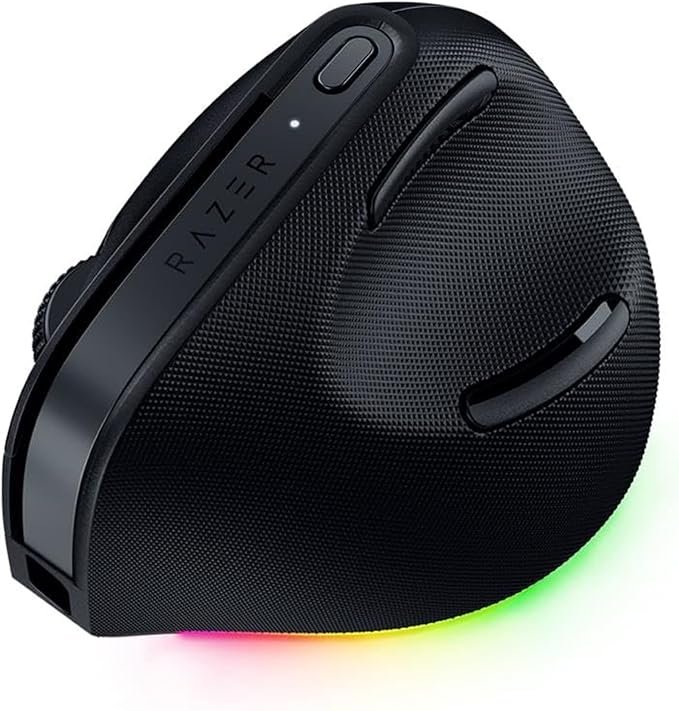
1. Ergonomic Vertical Mouse: Best for Wrist Comfort (★ 9.7/10)
Why We Recommend It:
A traditional flat mouse keeps the hand in an unnatural palm-down position. An Ergonomic Vertical Mouse uses an upright handshake grip that neutralizes wrist twisting, making it one of the most immediate ergonomic desk accessories to alleviate repetitive forearm strain.
✓ Pros
- Vertical handshake-style grip can provide a more neutral-feeling hand position
- Useful option for users who find conventional mouse grips uncomfortable
✕ What We Don’t Like
- May take some time to adjust to the different grip and pointer movement
Who Should Buy: Desk users who want a more upright mouse grip or find traditional mouse positioning uncomfortable.
Who Should Skip: Competitive gamers who strongly prefer symmetrical gaming mice.
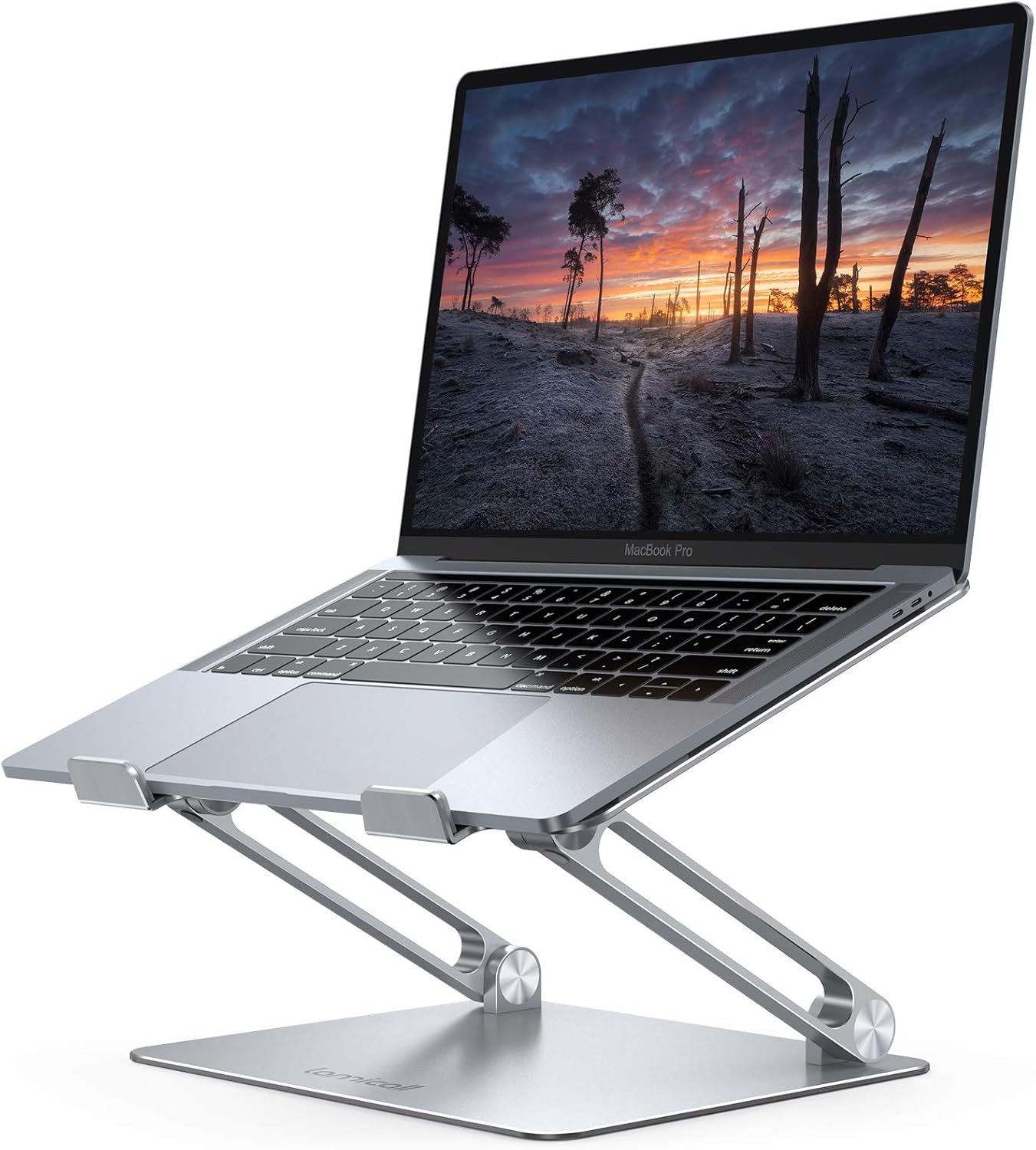
2. Adjustable Laptop Riser: Better Screen Positioning (★ 9.5/10)
Why We Recommend It:
Looking down at a laptop on a low surface encourages a constant downward neck tilt. An Adjustable Laptop Riser brings your screen directly up to eye level, preventing slouching and promoting open chest posture throughout deep work blocks.
✓ Pros
- Adjustable height makes it easier to position the display higher
- Aluminum construction provides a stable platform for compatible laptops
✕ What We Don’t Like
- Firm hinges may require two hands to adjust the stand
Who Should Buy: Remote workers who spend long periods viewing a laptop screen at a low desk position.
Who Should Skip: Users who already use a well-positioned external monitor setup.
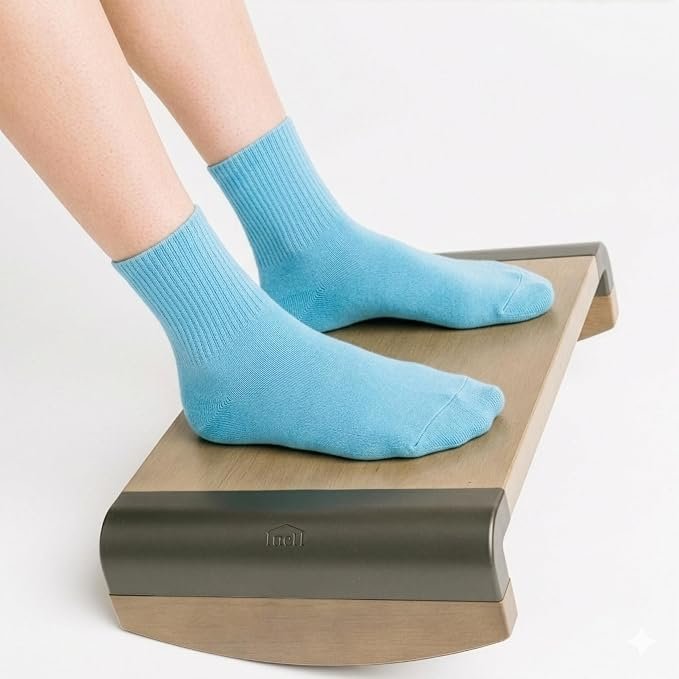
3. Dynamic Rocking Footrest: Foot & Lower-Leg Support (★ 9.4/10)
Why We Recommend It:
The Dynamic Rocking Footrest provides a stable surface for your feet while allowing gentle rocking movement. It helps redistribute pressure on the thighs when chair height or desk elevation prevents flat-foot seating.
✓ Pros
- Provides a stable platform for supported foot placement
- Dual-mode design offers static elevation or active rocking
✕ What We Don’t Like
- Adds height and may require adjustments to your chair or desk position
Who Should Buy: Desk users whose feet do not rest comfortably on the floor or who want additional foot support.
Who Should Skip: Users who already have comfortable foot placement and limited under-desk space.
4. Wave Ergonomic Keyboard: Wrist & Arm Comfort (★ 9.3/10)
Why We Recommend It:
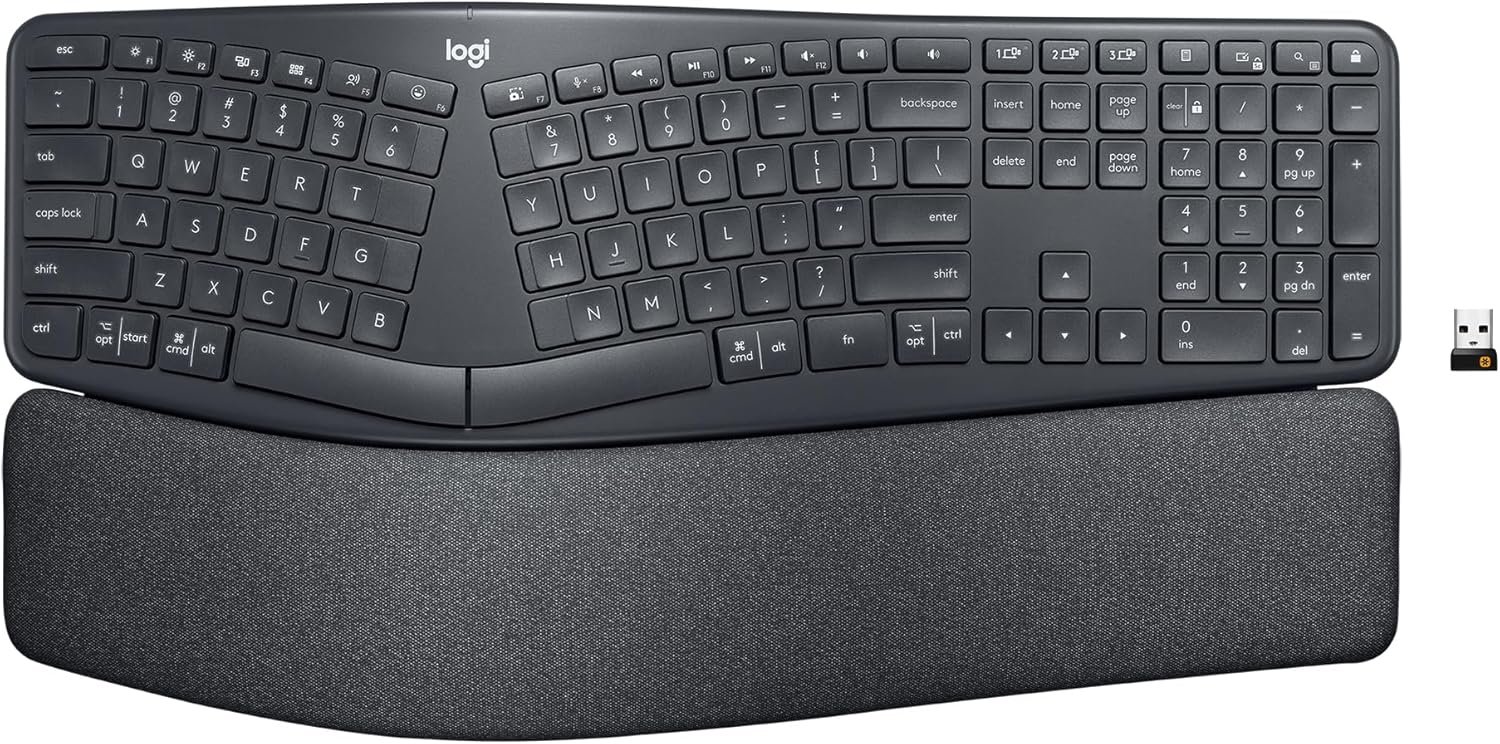
Standard flat keyboards force wrists into ulnar deviation. The Wave Ergonomic Keyboard uses a curved key frame with cushioned palm support to relax arm angles, ensuring your typing sessions remain fatigue-free.
✓ Pros
- Curved layout offers an alternative hand and wrist position
- Integrated palm support adds a resting surface while typing
✕ What We Don’t Like
- Wider footprint than many standard compact keyboards
Who Should Buy: Heavy typists and writers who prefer a curved keyboard layout and integrated palm support.
Who Should Skip: Users who prefer ultra-minimalist, travel-sized compact keyboards.
5. Ergonomic Lumbar Cushion: Lower-Back Support (★ 9.4/10)
Why We Recommend It:
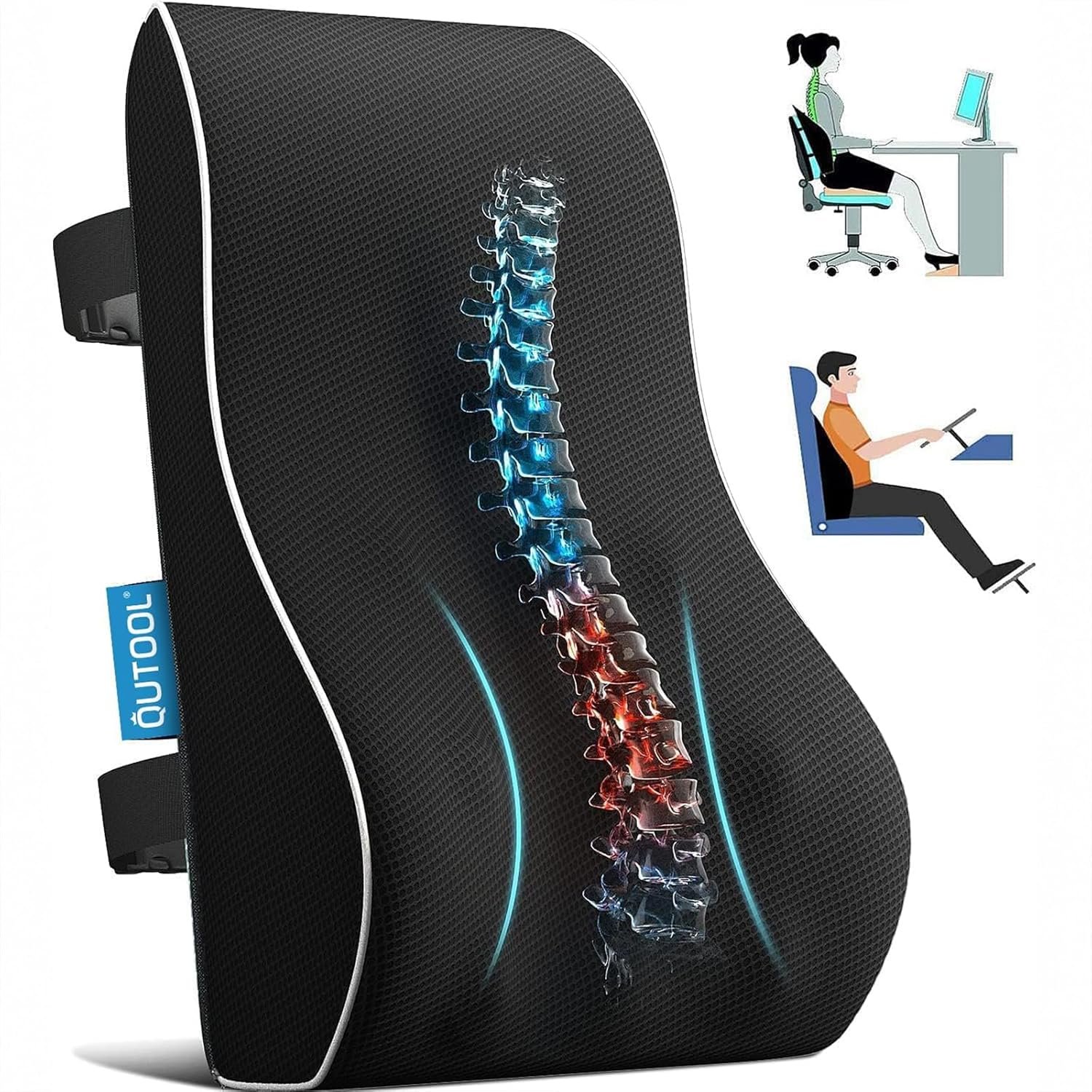
The Ergonomic Lumbar Cushion fills the natural hollow of the lumbar spine. For chairs lacking targeted spinal contours, it reinforces an upright posture without requiring an immediate, expensive chair replacement.
✓ Pros
- Adds dedicated lumbar support to chairs with limited built-in support
- Dual-strap mounting can help keep the cushion positioned on the chair
✕ What We Don’t Like
- May reduce usable seat depth on shallow office chairs
Who Should Buy: Office workers whose chairs lack adjustable or adequate lower-back support.
Who Should Skip: Users who already have a high-quality ergonomic chair with adjustable lumbar support.
Workspace Lighting & Cable Ergonomics: The Overlooked Essentials
When building a workspace, physical posture is only half the equation. Visual fatigue from poor ambient light and cognitive clutter from messy cables contribute significantly to end-of-day exhaustion:
💡 Anti-Glare Computer Light Bars
Mounting the best monitor light bar (or an asymmetric computer light bar) directs glare-free light down across your desk surface without reflecting off your display panel, minimizing eye strain.
🔌 Structured Cable Management
Dangling wires create visual clutter and legroom hazards. Integrating effective cable management solutions under your desk keeps your work environment clean, focused, and distraction-free.
How We Evaluate These Picks
We evaluate ergonomic accessories using practical factors such as design, adjustability, materials, intended use, stated features, user fit, and overall value. We do not assume that one accessory will work equally well for every body type, desk setup, or work style.
- Design & positioning: How the product is intended to support a particular part of the workstation.
- Adjustability: Whether the product offers useful positioning or setup flexibility.
- Materials & construction: The listed build materials and features that affect everyday usability.
- Fit & compatibility: Whether the product makes sense for different desk, chair, laptop, or user setups.
- Value: The combination of features, intended use, and current purchase price.
Editorial Note: This is an editorial buying guide, not a medical study or controlled laboratory test. Product specifications, prices, availability, and retailer policies can change, so check the current listing before purchasing. Ergonomic accessories may improve comfort, but they should not be treated as a diagnosis or treatment for a medical condition.
Frequently Asked Questions
How long does it take to get used to an ergonomic vertical mouse?
Adjustment time varies by person. Some users may adapt within a few days, while others may need longer to become comfortable with the different grip and pointer movement.
Are laptop risers sufficient without an external keyboard?
A riser can improve screen height, but raising a laptop also raises its built-in keyboard. For longer typing sessions, pairing the riser with an external keyboard and mouse can provide more flexibility in positioning the screen and input devices separately.
Do monitor light bars and cable management count as ergonomic upgrades?
Yes. Ergonomics covers both physical posture and visual or spatial well-being. Preventing eye strain with an asymmetric monitor light bar and keeping your foot space clear with under-desk cable routing are vital components of a fatigue-free desk setup.
Final Ergonomic Setup Verdict
A truly functional workspace relies on intentional desk equipment that supports physical alignment and reduces fatigue. Start with high-impact wrist and neck adjustments like a vertical mouse and laptop stand, and keep ambient glare eliminated for optimal long-term focus.
View Top Recommended Vertical Mouse ↗Written by Anik
Tech EditorEvaluating minimal workspace essentials, desk accessories, and everyday carry gear at The Few Picks. Our guides use product information, listed features, and practical buying considerations to help you make more informed purchasing decisions.